Volunteerism to Support Your Child’s Mental Health
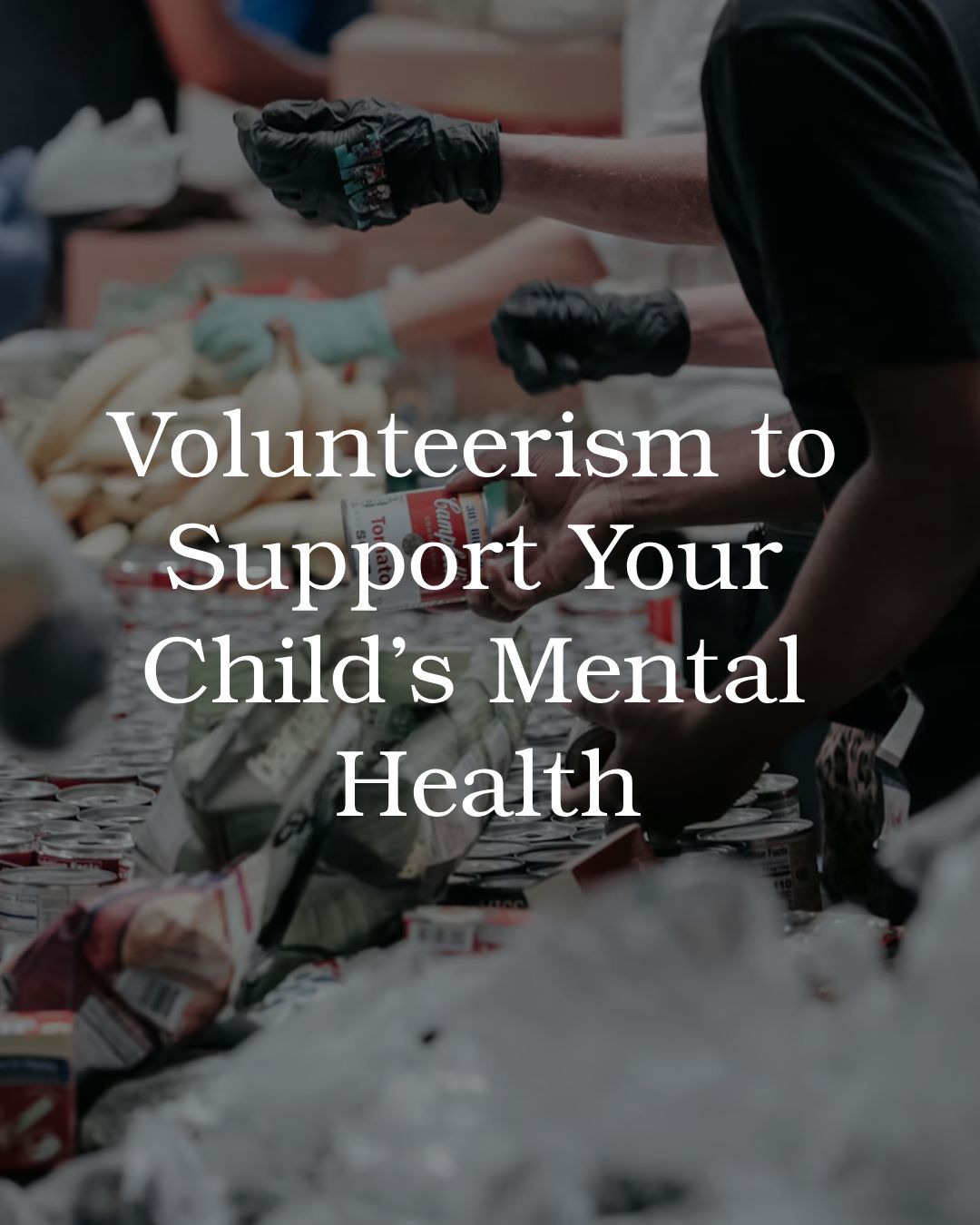
In college, I volunteered in a Mother Teresa clinic in Haiti, holding infants, feeding them, and playing with children whose parents were unable to care for them. Later, in medical school and residency, I had opportunities to learn and volunteer in places like India, Guatemala, and Nepal. At the time, I didn’t realize I was drawn to this work simply because it made me feel good. And I certainly didn’t expect that years later, alongside other treatments, I would routinely prescribe volunteer activities to children and adolescents with symptoms of anxiety, feelings of unhappiness, and even behavioral problems, to help make them feel better.
The science on volunteerism is robust. Engaging in service redirects our internal focus outward, onto helping our community, and may actually re-wire the brain, strengthening positive, joyful neuronal pathways while activating our brain’s reward centers. MRI studies confirm that our brains, like our feelings, light up when we go out of our way to help others. Further, the shared experiences, connections we make, and the meaning we associate with the work all contribute to the positive effects we feel. Here are some tips to incorporate the mindset of volunteerism in your home:
Start small: community service does not have to be big.
With young children, encourage simple service projects, like walking through a park or your neighborhood with bags, or picking up strewn trash where you find it. Young children are wired to help, often jumping up when given the chance to contribute. As your children get older, tailor volunteer activities to their interests. Some kids may be drawn to conservation efforts while others are passionate about supporting underserved communities or areas affected by natural disasters. Elementary-age kids might help at a local animal shelter, while teens might take on a recurring commitment at a local soup kitchen. Let your child take the lead, and allow them to develop their unique passions in community service.
The size or impact of a service project matters far less than the simple act of doing something for someone or something else. Emphasize the significance of the work, even if it is on a small scale, like helping a neighbor walk their dog or tutoring younger kids after school. The act of doing something for another person along with the social connection creates meaningful purpose and community-belonging for your child.
Be a role model.
Share your volunteer activities with your children, or include them when you can. My kids help me write letters to encourage citizens to vote. It is a low commitment activity done from the convenience of our dinner table, but it allows them to contribute to the election process, teaches them about the importance of voting, and affirms the mindset that they can make a difference.
If you are not currently engaged in any volunteer work, share stories from your past. You may have worked on clean-up projects, built homes for those in need, or tutored peers. Never underestimate the power of your own stories. Even your seemingly disaffected teen is listening.
Reflect on the volunteer activity.
Research suggests that children who reflect or debrief on their volunteer work gain more benefit from the activity. This makes sense: when children discuss or think about the time spent volunteering, their brains are strengthening the value of the activity. After spending some time on service work, ask your child what aspects they enjoyed, anything they would do differently, who they worked with, or what they learned.
If volunteering is too heavy a lift in your life right now, try incorporating acts of kindness.
Research tells us that small acts of kindness matter, lifting spirits of all involved parties. Acts of kindness may include offering to help a lost person find their way, giving someone in a hurry your spot in line at the grocery store, or buying a coffee for a colleague who is having a rough day. For a child, an act of kindness can come in the form of helping someone pick up spilled belongings, offering to set the table, sitting with a classmate sitting alone at lunch, asking a grown-up what you can do to help, or helping a friend with homework. Routinely asking a dinner table question about acts of kindness serves as an opportunity for reflection and reinforces the value of service in your family.
The Breakdown
While mental health challenges can be complex, often involving therapists, doctors, and medications, building habits like volunteerism or even daily acts of kindness can make a difference. Helping others gets us outside our heads and activates our reward centers, easing or alleviating feelings of anxiety, depression, and loneliness. Helping others simply makes humans feel good.
You may also enjoy reading about Fresh Air and Mental Health or Encouraging Children to Stand Up for Themselves.
Thank you for reading my human-generated articles! If you found this helpful or educational, please share, follow on your preferred platform, or subscribe below. For concierge parent coaching or consultations, please contact me at www.DrAngel.com.
For more perspective on what it takes to have and raise a thriving little human, check out my podcast, The Unplanned Parent, on Apple, Spotify, YouTube, or wherever you listen or watch.
References:
Kim MJ, Sul S. How helping others helps us: neural mechanisms linking prosocial behavior to psychological and physical wellbeing. Front Hum Neurosci. 2026;20:1686801. Published 2026 Feb 23. doi:10.3389/fnhum.2026.1686801
Lanza K, Hunt ET, Mantey DS, Omega-Njemnobi O, Cristol B, Kelder SH. Volunteering, Health, and Well-being of Children and Adolescents in the United States. JAMA Netw Open. 2023;6(5):e2315980. doi:10.1001/jamanetworkopen.2023.15980
van Goethem A, van Hoof A, Orobio de Castro B, Van Aken M, Hart D. The role of reflection in the effects of community service on adolescent development: a meta-analysis. Child Dev. 2014;85(6):2114-2130. doi:10.1111/cdev.12274
Ballard PJ, Daniel SS, Anderson G, et al. An Exploratory Feasibility Study of Incorporating Volunteering Into Treatment for Adolescent Depression and Anxiety. Front Psychol. 2022;13:840881. Published 2022 Apr 29. doi:10.3389/fpsyg.2022.840881
Eisenberger NI, Noble R, Naclerio M. The Benefits of Prosocial Behavior for Mental and Physical Health: A Neuroscience Approach. Curr Dir Psychol Sci. Published online July 9, 2026. doi:10.1177/09637214261459027
Naclerio M, Lazar L, Hornstein EA, Eisenberger NI. Exploring the effects of prosocial and self-kindness interventions on mental health outcomes. Emotion. 2026;26(1):14-24. doi:10.1037/emo0001577