The Fresh Air Prescription: Outdoor Play Improves Children’s Mental Health
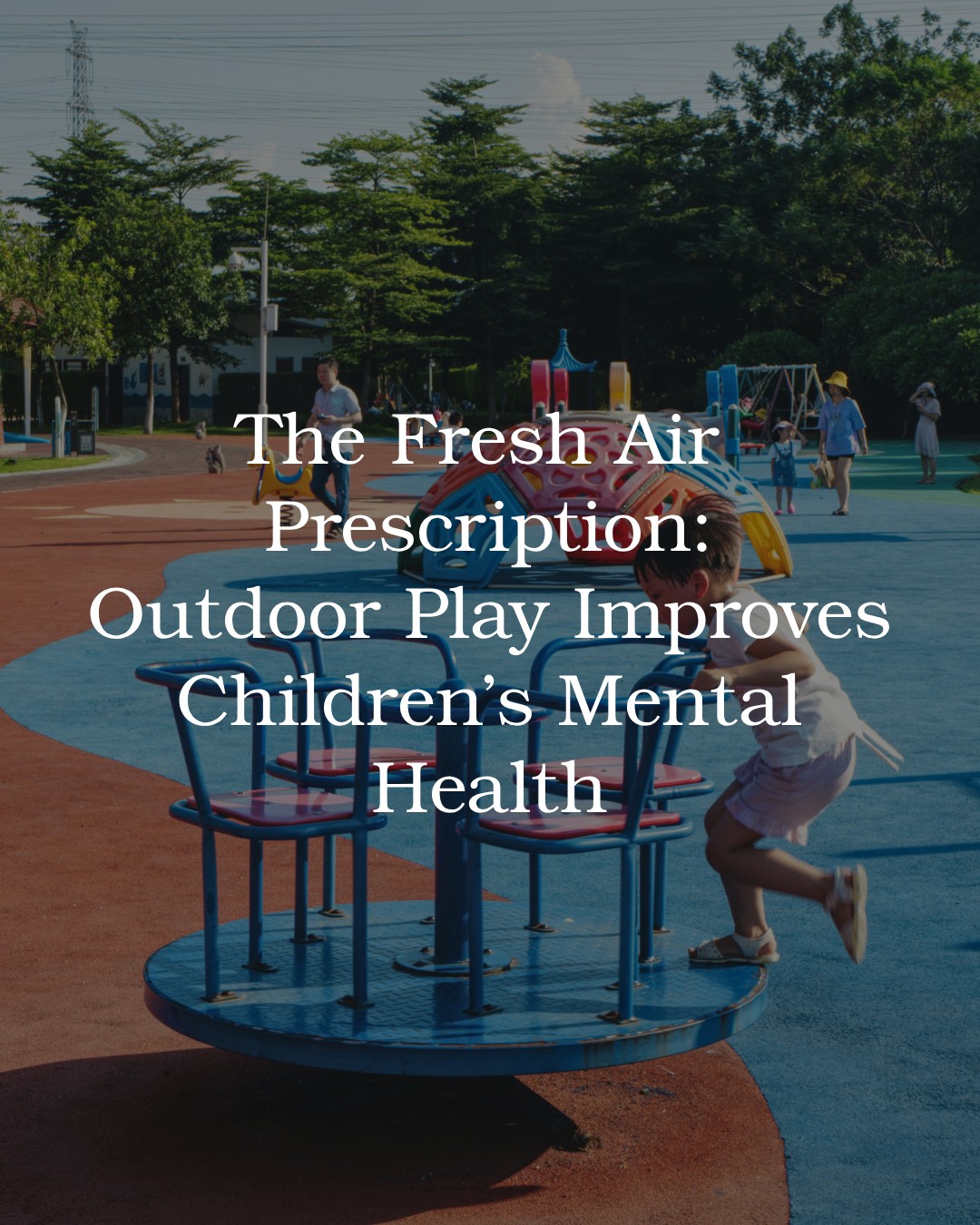
I loved living in Virginia — the DC suburbs are lush with foliage, museums, playgrounds, shopping districts, and restaurants. On the other hand, Virginia has frigid winters and humid, buggy summers. It was a rare day when we could comfortably leave doors and windows open. As a result, we were breathing ventilated air year round. Once I had kids, however, I prioritized outdoor time, despite my dislike of the cold, the hot, and the humid, because I understood how important outdoor playtime is for healthy development during childhood.
Spending time outdoors exposes your child to biodiversity and microbiota necessary for a healthy immune system. From a developmental standpoint, playing outdoors offers the benefits adventure, socialization, and risk-taking The scenery is entirely different from those indoors (and the addictive world of electronics), bringing out your child’s creativity and imagination in the real world.
A recent study following over 4,000 Scottish children suggests preschoolers engaging in more outdoor play at ages 2-4 have improved mental health measures at age 8. And each additional day per week of outdoor play seemed to have protective mental health effects. This is especially important since time spent playing outdoors has declined sharply over recent decades, driven by heavier traffic, safety concerns, and the pull of screens — which means the very years when outdoor play seems most protective are the years it’s become hardest to protect.
Humans are built to spend time outdoors, yet, our school, work, and busy lives increasingly keep us indoors. Kids in daycare and preschool tend to play outside with their classmates,, but I recommend parents complement school play with playdates, parks, picnics, hikes, and outdoor adventures — not just for the necessary outdoor exposure — but for the shared experiences and memorable family bonding.
Here are Dr. Angel’s options to help you and your child get some more fresh air while creating connections:
For the adventurous:
Play outside with your child 5-7 days a week for 20-45 minutes. Brainstorm games that work for your family — maybe four-square, catch, or walking the dog while your child bikes (with a helmet, of course). I promise the time will go by faster than you expected. Spice up your neighborhood walks with a scavenger hunt. Even a teen’s competitive spirit may emerge.
On weekends, plan trips to the park, bike rides, hikes, or picnics in nature. Try to give your child autonomy to plan and decide how to spend their time outdoors.
For the tepid:
Play or walk outside with your child 1-3 days a week for 10-15 minutes. Try and have dinner on the back patio or in an outdoor food court where your child may run around or bump into friends. On weekends, plan playdates in the park or a community pool.
For non-committals:
Roll your windows down when driving through quiet streets or in nature — be it a tree-lined street, a golden hill, a snowy lane, or a bridge over a stream. Try to introduce small adjustments to your schedule such as walking when possible, even it it’s just to the bus stop or to a neighbor’s home. Open up patio doors, reducing barriers to quick outdoor runs — maybe to grab the mail or say hi to a neighbor walking past.
In Summary
Living, breathing, and enjoying the outdoors is a luxury in modern life. For children, time spent playing at school is a good start but should be augmented with family play. Prioritize outdoor time and mental health by setting goals that work for you and your family.
Thank you for reading my human-generated articles! If you found this helpful or educational, please share, follow on your preferred platform, or subscribe below. For concierge parent coaching or consultations, please contact me at www.DrAngel.com.
For more perspective on what it takes to have and raise a thriving little human, check out my podcast, The Unplanned Parent, on Apple, Spotify, YouTube, or wherever you listen or watch.
References:
Dodd, Helen F et al. “Early outdoor play predicts trajectories of child mental health in a population-based cohort.” Journal of child psychology and psychiatry, and allied disciplines, 10.1111/jcpp.70175. 8 Jun. 2026, doi:10.1111/jcpp.70175
Bole, Aparna et al. “The Built Environment and Pediatric Health.” Pediatrics vol. 153,1 (2024): e2023064772. doi:10.1542/peds.2023-064772