The Case For Reading Aloud With Your Children
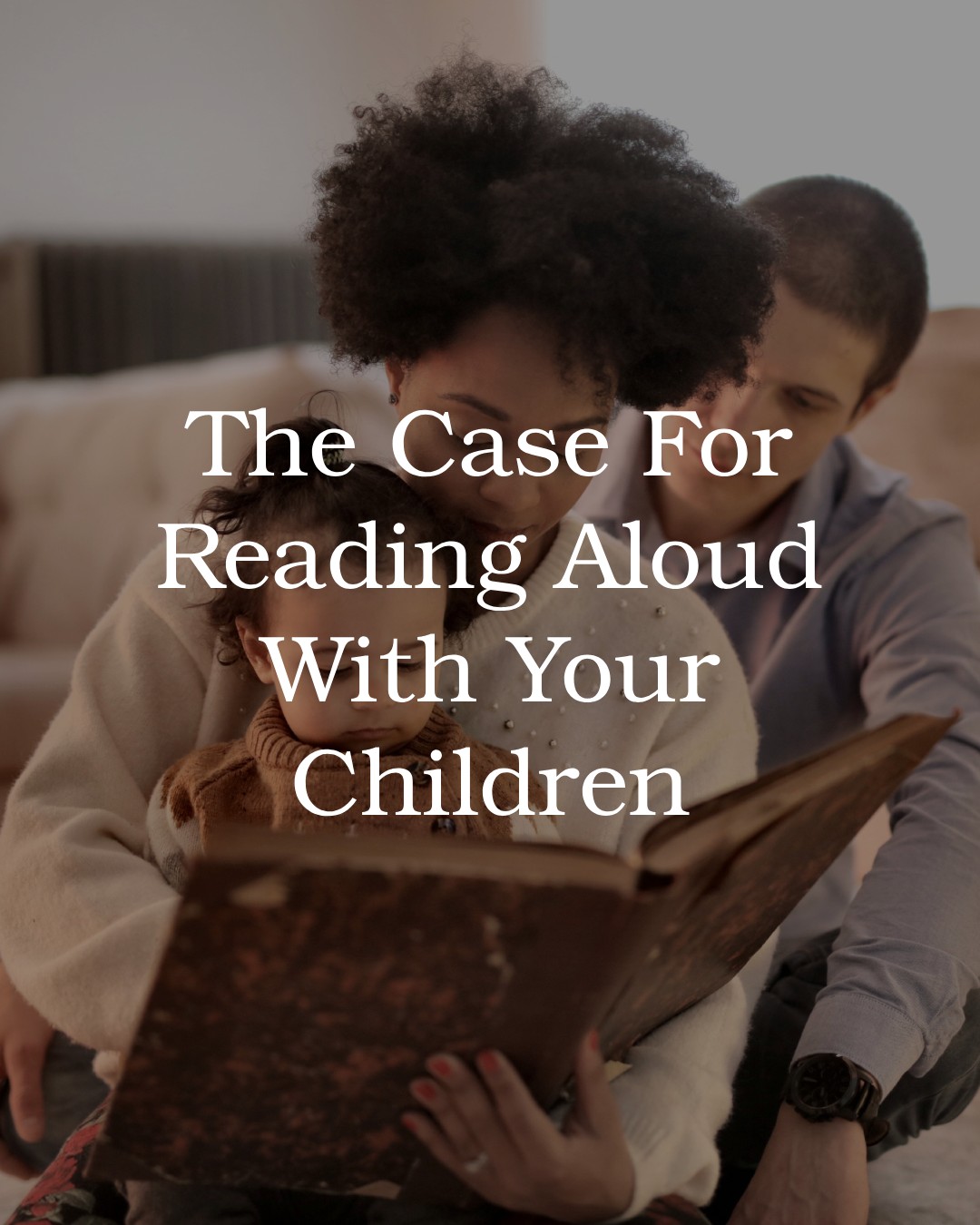
I recall the time I helped put one of my best friend’s sons down for a nap with some reading time. He was so excited about our pre-nap reading that he brought me three books—to start. After the second book, my eyes were dropping. After the third, I was exhausted. And yet, he eagerly insisted on just one more book. By the end, my mouth was sore and I felt like I was exercising muscles heretofore dormant.
At the time, I was pregnant with my first child and thought, how will I ever read to my own kid? I don’t think my mouth muscles or my attention span can handle this. I decided reading was just going to be a Daddy job.
As it turned out, reading to and with my children is one of my all time favorite activities. Nothing beats the gift of shared references (our dog is named Albus Dumbledog), the movies we watch after we finish the books, and the cuddles. I look forward to the meditative time, where my child and I sit together, without any distractions, and venture into the pages.
Unfortunately, this sacred time is sometimes hard to prioritize or altogether neglected as research suggests that less than half of American children are read to daily. Below, I review my reasoning and specific recommendations for reading with your children, even as they grow up.
Reading results in improved language acquisition.
Research shows that children who are read to are exposed to more words and have higher developmental and cognitive measures compared to peers in homes that do not read. Famously known as the million word gap, researchers estimated that by reading just one picture book a day to a child, by age 5 that parent would expose that child to 1.4 million more words compared to children whose parents did not read to them.
Parental stress declines when they read with their children.
An underrecognized benefit to reading together is parental happiness. Studies have shown that parents may have fewer feelings of anxiety and depression and more of connection and warmth toward their child when they read together. Like with other mindful activities, reading provides a stillness—an opportunity for distraction-free focus on your child.
Make reading part of your daily routine.
Prioritize reading in your routine from the very beginning—as early as two to four months. When my kids were toddlers, I would leave a few board books in their crib. Books became favorite play toys, even better when their parents, grandparents, or other loving caregivers played with them. Relaxing routines help cue children’s minds to understand when the day is winding down and improves their quality of sleep. As children mature, maintaining a healthy sleep routine is arguably more important. For teenagers, phones and screens are a big culprit in disrupting sleep schedules. Limit screen time an hour or more before bed to minimize blue light exposures that disrupt circadian rhythms. Encourage reading, journaling, or meditating to relax before bedtime to support deeper, more restorative sleep.
Use books to drive comprehension and dialogue.
Exposure to words along with interactive dialogue may explain the differences seen on brain imaging in studies comparing children exposed to more vs. less reading. Books teach children vocabulary used outside of daily conversations, and if they read with you, you create a space for connection and age-appropriate discussion around knowledge, comprehension, social-emotional skills, and critical thinking:
Where is the yellow car?
Why do you think Daniel took his sister’s toy?
How would you feel if someone said those words to you?
What is another way Ginny could have made that point?
What do you think will happen next? Why?
Dads should read with kids, too.
I am sure many fathers out there read with their children, but research suggests mothers read more than fathers. Shared book reading is a low-cost, high reward activity for all adults in a child’s life.
Avoid reading on devices. Reading on devices is almost always a sole activity, whereas print books more often involve a parent and child. Even with shared reading, studies comparing screens and print books suggest inferior comprehension and fewer interactions when parents read on screens. Plus, picture books provide the perfect balance of words and pictures to drive literacy.
The Breakdown
Shared reading benefits children and parents. Start reading books—on paper, not screens—with your children when they are young, and use the time to build routines and activate your child’s imagination. Ask age-appropriate questions and expand their vocabulary. As your kids grow, books evolve and your child may go from sitting in your lap to sitting at your side, but the benefits of shared reading time endure.
You may also enjoy reading about elevating your child’s home learning environment, my family’s digital detox, or factors that can improve sleep.
Thank you for reading my human-generated articles! If you found this helpful or educational, please share, follow on your preferred platform, or subscribe below. For concierge parent coaching or consultations, please contact me at www.DrAngel.com.
For more perspective on what it takes to have and raise a thriving little human, check out my podcast, The Unplanned Parent, on Apple, Spotify, YouTube, or wherever you listen or watch.
References:
Hutton, John S et al. “Development of an Eco-Biodevelopmental Model of Emergent Literacy Before Kindergarten: A Review.” JAMA pediatrics vol. 175,7 (2021): 730-741. doi:10.1001/jamapediatrics.2020.6709
Klass, Perri et al. “Literacy Promotion: An Essential Component of Primary Care Pediatric Practice: Policy Statement.” Pediatrics vol. 154,6 (2024): e2024069090. doi:10.1542/peds.2024-069090
Logan, Jessica A R et al. “When Children Are Not Read to at Home: The Million Word Gap.” Journal of developmental and behavioral pediatrics : JDBP vol. 40,5 (2019): 383-386. doi:10.1097/DBP.0000000000000657
Xie, Qian-Wen et al. “Psychosocial Effects of Parent-Child Book Reading Interventions: A Meta-analysis.” Pediatrics vol. 141,4 (2018): e20172675. doi:10.1542/peds.2017-2675
Chen, Yu et al. “Contributions of mothers’ and fathers’ shared book reading with infants at 9 months to language skills at 18 months in ethnically and socioeconomically diverse families.” Infant and child development vol. 33,5 (2024): e2516. doi:10.1002/icd.2516
Munzer, Tiffany G et al. “Differences in Parent-Toddler Interactions With Electronic Versus Print Books.” Pediatrics vol. 143,4 (2019): e20182012. doi:10.1542/peds.2018-2012