How to Elevate Your Baby and Toddler’s Home Learning Environment
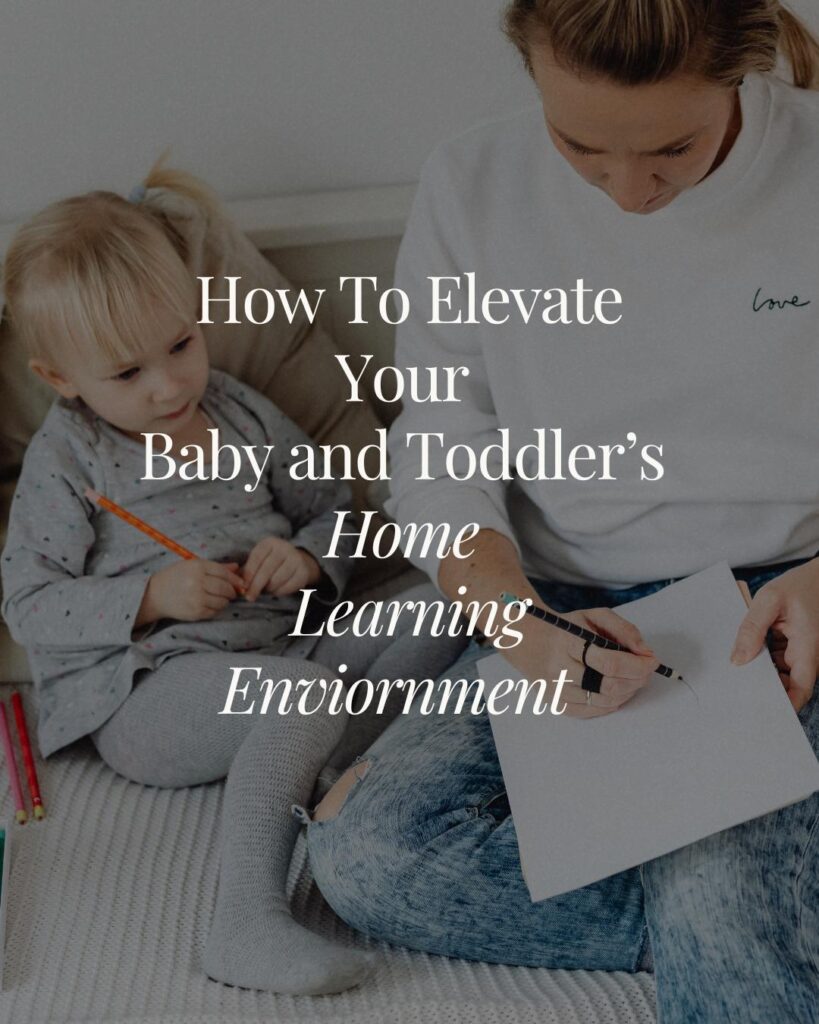
A new study from the United Kingdom cites a 2-year-old’s home learning environment as the primary correlation influencing a child’s vocabulary development, followed by income/education advantage, followed by screen time. What that means is, yes, you should reduce your child’s screen time but, moreso, you should take advantage of opportunities to improve your child’s home learning environment, i.e., how and what your child learns at home.
Here are some recommendations I give parents, many of whom are managing businesses or large teams while raising kids, who ask me about supporting their baby’s or toddler’s brain development:
Just Talk. During their first few visits, parents ask me how to interact with their young babies. My response is, “Just talk. Narrate your life.” Look at your baby and say Now I think I will get a glass of water, or Look at this– I guess you need a new diaper! Or Who do you think is at the door? You will be exhausted and dry-mouthed doing this all day, but do it as much as you can. You will see your baby engage with you, start cooing, and reach with her hands and feet trying to show her eagerness to communicate with you. Toddlers will typically babble back and eventually mimic you as their brains develop. And don’t second guess yourself for speaking in baby talk, also known as motherese or infant directed speech. This higher pitched, sing-songy style of speech may cue your baby, letting her know to pay attention because someone is talking to her, as opposed to typical speech patterns among adults. Studies suggest that babies, at least through age 13 months, seem to prefer infant directed speech.
Read Daily. I was surprised that only 56% of parents surveyed in the UK study read to their toddlers daily. Famously known as the million word gap, researchers demonstrated that, by age 5, parents who read one picture book a day with their children expose them to 1.4 million more words compared to children who are not reading with a caregiver. Books teach children vocabulary used outside of daily conversations, and if they read with you, you create a space for connection and age-appropriate discussion, perhaps around comprehension or emotions(Where is the yellow triangle? Or Why do you think Daniel took his sister’s toy? Or How would you feel if someone said those words to you?)
Make reading part of your routine from the minute you create routines for your baby, even if that is as early as two to four months. When my kids were toddlers, I would leave a few board books in their crib. Books became favorite play toys, even better when their parents, grandparents, or other loving caregivers played with them.
Sing to Your Kids. Or Play Music. Or Both. Songs, like books, are made up of words. You can sing at home or in mommy-and-me classes with your child. I still keep in touch with my kids’ Music Together teacher, Miss Patti, and years later, some of those songs make appearances on our kitchen-cleanup or roadtrip playlists. In addition to exposing your kids to more words, songs become warm memories, taking you and your child back to those moments.
Is Your Overwhelmedness the Reason Behind Your Kid’s Excessive Screen Time? This study highlights that screens are often used when parents are stressed. That is ok. It happens to everyone. When you were young, your parents probably put you in front of the TV. But if that is happening more of the time instead of some of the time, I would re-evaluate the schedule in your home. Everyone’s situation is different, but some of my recommendations include finding a mommy’s helper, reducing activities for parents and/or kids, and reducing parental screen distractions (like social media, news apps, or sports). For more guidance on screen time for all ages, read here, or for information on a family digital detox, read here.
Takeaways
- How you engage with your child matters. You control your child’s home learning environment.
- Exposing your child to more words starts early, with every word you say. Your baby wants to see you, be held by you, and hear you. Talk to your baby as much as you can.
- Reading should be a part of every child’s routine, even a baby’s.
- Singing and listening to songs is another way to connect with your child and expose her to more words.
- If you find you use screens to help distract your child when you are overwhelmed, consider some lifestyle changes to help you slow down.
Thank you for reading my human-generated articles! If you found this helpful or educational, please share, follow on your preferred platform, or subscribe below. For coaching or consultations, please contact me at www.DrAngel.com.
References:
Outters, Vivien et al. “Maternal input and infants’ response to infant-directed speech.” Infancy : the official journal of the International Society on Infant Studies vol. 25,4 (2020): 478-499. doi:10.1111/infa.12334
Dave, Shruti et al. “Motherese, affect, and vocabulary development: dyadic communicative interactions in infants and toddlers.” Journal of child language vol. 45,4 (2018): 917-938. doi:10.1017/S0305000917000551
Logan, Jessica A R et al. “When Children Are Not Read to at Home: The Million Word Gap.” Journal of developmental and behavioral pediatrics : JDBP vol. 40,5 (2019): 383-386. doi:10.1097/DBP.0000000000000657