Three Prosocial Habits That Build Belonging in a New Environment
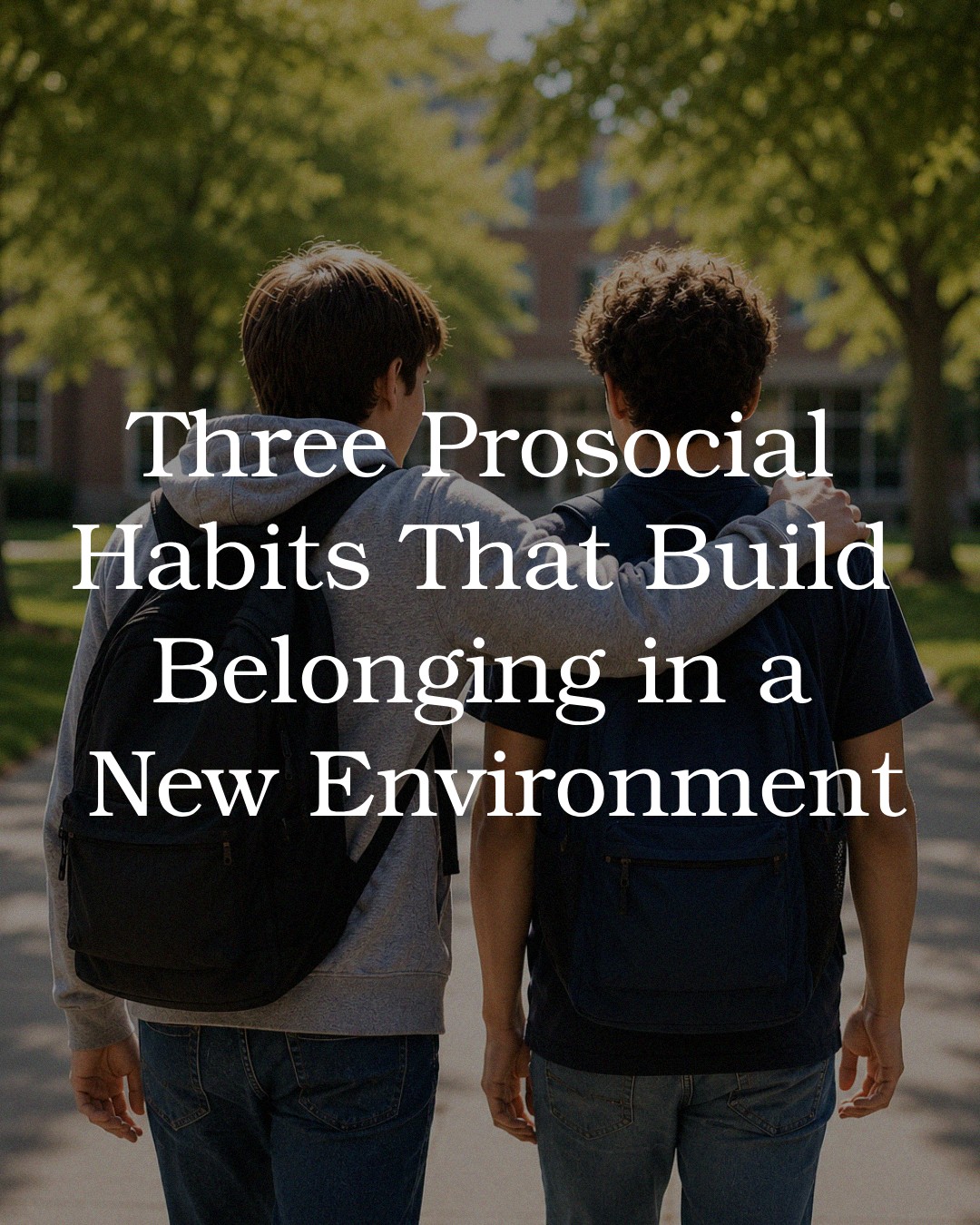
Heading back to school is hard on kids and parents alike. From understanding new teachers’ expectations and hoping someone will sit with you at lunch to remembering to charge your computer, school is full of stressors. And with adolescent brains evolving and developing a heightened need for social belonging, it’s no wonder that school drama is timeless and can be so damaging. In a 2023 survey, almost 40% of teens reported persistent feelings of sadness or hopelessness at some point in the past year. If your tweens or teens are anything like mine, feelings of belonging matter.
While schools can implement programs to foster belonging, I recommend equipping your child with a few prosocial tools that can boost confidence, improve self-worth, and strengthen relationships. Here are three actions I suggest to my kids to help improve their day and maybe even someone else’s:
Offer to Help.
Engaging in a kind act builds self-worth and can even help with more significant mental health problems. When treating teens with anxiety or depression, prescribing volunteer work is always on my management program. In the school setting, this can translate into intentional acts of kindness — anything from helping a teacher clean up the classroom to helping carry someone’s school supplies to grabbing the napkins when someone spills their drink. Doing something useful reminds a kid they matter and that feeling fuels self-worth belonging.
Ask for Help.
Asking for help makes peers feel needed and useful, deepening a relationship and opening the door to potential conversation. When a tween or teen feels alone, uncertain, or just needs to know what the homework assignment is for tonight, asking for help turns an isolating moment into a small, meaningful connection. Remind your child that asking for help is never something to be ashamed of. Instead, asking a peer for help in the form of advice or to explain what the teacher just said can even open the door to making a new friend.
Ask Open Ended Questions.
High stress environments reduce our ability to think straight. It’s hard to string together a good sentence when burdened with an overarching sense of awkwardness and low self-worth. Having a few (perhaps even rehearsed) conversation starters can help. What did you do this weekend? What made you interested in soccer? I’m curious, how did you come up with that? If you practice at home, make sure to encourage and role-model follow-up questions.
The Breakdown
Young people tend to feel alone in their feelings of not belonging, often leading to a continuous loop of isolation and low self-worth. Prosocial behavior boosts life satisfaction and well-being. That, in turn, strengthens relationships which feed well-being right back into the loop, reversing the spiral instead of feeding it.
You may also enjoy reading about Mental Health Milestones and Social Connectedness Improving Sleep.
Thank you for reading my human-generated articles! If you found this helpful or educational, please share, follow on your preferred platform, or subscribe below. For concierge parent coaching or consultations, please contact me at www.DrAngel.com.
For more perspective on what it takes to have and raise a thriving little human, check out my podcast, The Unplanned Parent, on Apple, Spotify, YouTube, or wherever you listen or watch.
References:
Woolf, Steven H. “The Youth Mental Health Crisis in the United States: Epidemiology, Contributors, and Potential Solutions.” Pediatrics vol. 156,5 (2025): e2025070849. doi:10.1542/peds.2025-070849
Gregori, Fulvio et al. “The Relations Among Prosocial Behavior, Life Satisfaction, and Hedonic Balance Among Young Adults.” Journal of personality vol. 94,3 (2026): 419-430. doi:10.1111/jopy.70010
Harris, Michelle A, and Ulrich Orth. “The link between self-esteem and social relationships: A meta-analysis of longitudinal studies.” Journal of personality and social psychology vol. 119,6 (2020): 1459-1477. doi:10.1037/pspp0000265