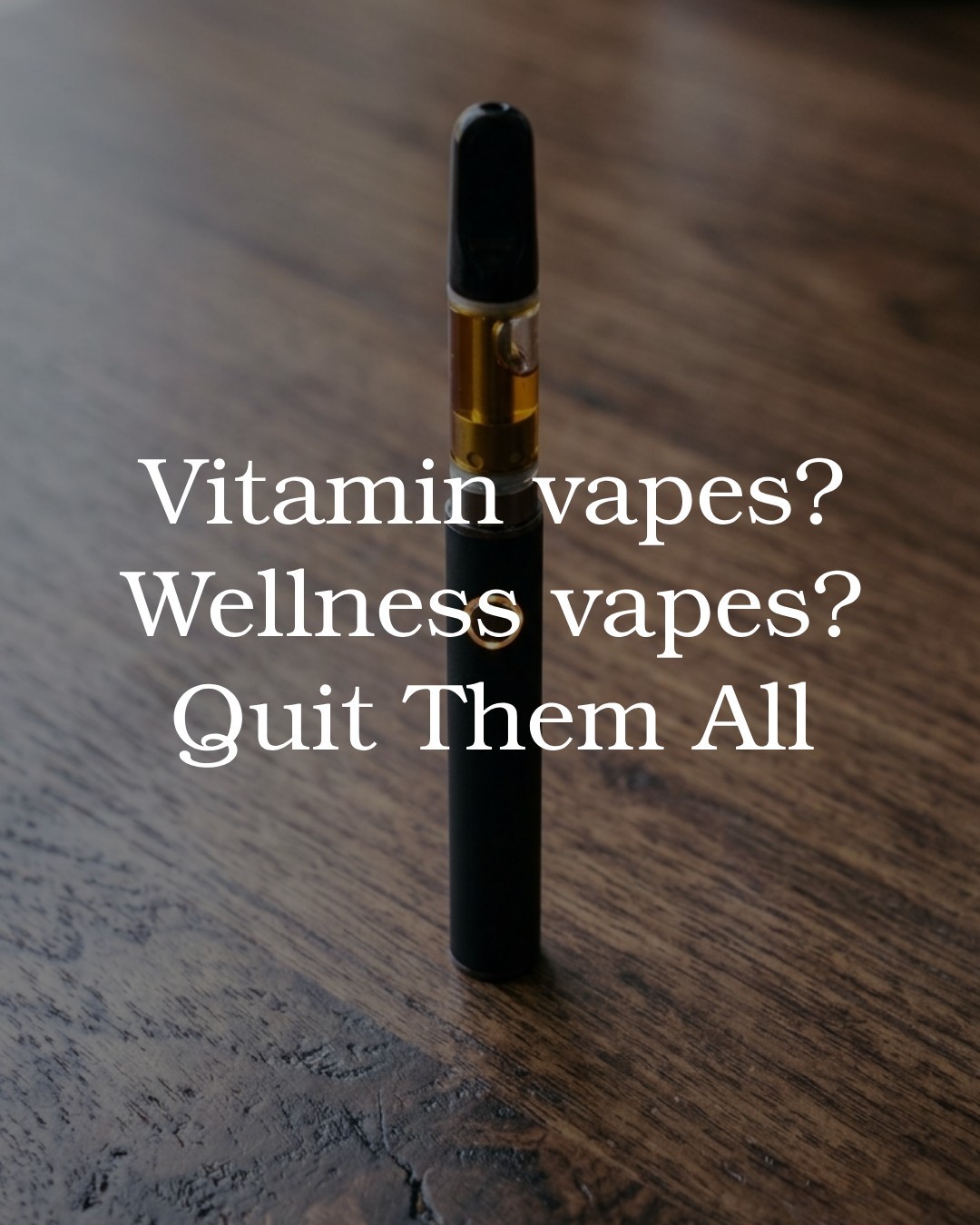
Vitamin vapes? Wellness vapes? Quit Them All
It was not until I became a pediatrician and a parent that I understood the impact of policy on day-to-day parenting practices. From seat belts and carseats to helmets and indoor smoking, federal regulations shape our lifestyle habits and long-term health.
The FDA’s recent changes to vaping regulations have stirred up controversy — especially with parents. These regulatory changes make it easier for vape and nicotine products to enter the market before they are fully scrutinized by the FDA. While at first glance this may seem alarming, ultimately, over 85% of vape/nicotine products on the market now are unauthorized by the FDA. So these changes may not alter the risk to children as much as we may anticipate. Instead, this can serve as another reminder about speaking to our kids about vaping and how parents can take a leading role in protecting their children.
Most vape products are unregulated.
It came as a surprise to me that cannabis, vitamin, melatonin, and other non-nicotine vapes are outside the authority of the FDA. In fact, in a 2024 study, only 13.8% of e-cigarette products were approved for sale by the FDA, meaning that unregulated products easily make their way onto the market, often unbeknownst to consumers. I do not recommend vapes as a delivery for any substance, vitamins, supplements, or otherwise. If a child learns to associate the action of vaping such as the hand-to-mouth motion, the device, the ritual of puffing — with something benign or even beneficial, it can be a risky conflation if or when nicotine vapes are presented.
Kids are exposed to vaping as early as middle school.
About 3% of middle schoolers and 8% of high schoolers are currently vaping. Nicotine can harm the developing brain, including areas of the brain responsible for mood, impulsivity, learning, and potential for addiction. When surveyed, the most common reasons young people cite for initiating vaping is a friend doing so, social pressure, curiosity, or feelings of anxiety and/or depression.
Most young people who vape want to quit.
Two-thirds of youth who vape want to quit or have tried quitting. Quitting is hard. A child needs the support of family, health care teams, and community to quit. Many teens who vape have symptoms of anxiety or depression, making the need for support even greater.
Talking to Your Child Makes a Difference.
Secrets are stressful. Your teen may not want to admit their problems, but sharing them will ease the burden — if they know their family will support them. Supporting does not mean condoning, but it means helping them and loving them even though you may not agree with their decisions. If you suspect your child is vaping but you don’t know how to start the conversation, you can ask if they have friends who are vaping, or what they know about nicotine or vape products. In addition to consulting your pediatrician, there are community programs and resources to help support you and your child.
Start the conversation early and build trust.
As with most sensitive subjects, I recommend starting early, with simple, age-appropriate conversations. Even for toddlers, notice when you see a smoker, and talk about how smoking is addictive, hard to stop once you start, or harmful to their lungs. Always let your child know that if they make a mistake, whether they lost (another) water bottle, hit a classmate, or stole a candy bar, you will always love them and help figure out a solution to their problem. As surveys have shown, the second most common reason reported for vaping is curiosity. Conversations and connection are your best way as a parent to ensure your input is part of the decision making process when your child’s curiosity piques. From there, you can guide the dialogue to help your child prioritize their health and long-term well-being.
Know Your Kids’ Friends.
Teens start vaping because their friends are doing it. Keeping up with your child’s social circle may be more difficult with age. Staying engaged during the progression of childhood is much easier than trying to re-engage during the teenage years. Family meals and device-free car rides are ways to maintain connection during adolescence, which, in turn, helps combat peer pressure.
Breakdown
- Most electronic delivery devices are unregulated.
- Youth start vaping in middle and high school.
- The most common reasons adolescents cite for vaping are
- Friends are doing it
- Curiosity
- Feelings of anxiety and/or depression
- Staying engaged in your child’s social life and maintaining connection may help your child find strength when faced with social pressures.
You may also enjoy reading about my brother’s experience with quitting vaping.
Thank you for reading my human-generated articles! If you found this helpful or educational, please share, follow on your preferred platform, or subscribe below. For concierge parent coaching or consultations, please contact me at www.DrAngel.com.
For more perspective on what it takes to have and raise a thriving little human, check out my podcast, The Unplanned Parent, on Apple, Spotify, YouTube, or wherever you listen or watch.
References:
Ganz, Ollie et al. “Regional variations and market share of FDA-authorised products for top-selling electronic cigarette brands in the USA: 2022-2024.” Tobacco control, tc-2024-058965. 30 May. 2025, doi:10.1136/tc-2024-058965
Jenssen, Brian P et al. “Pediatrician-Delivered Smoking-Cessation Messages for Parents: An Update.” Academic pediatrics vol. 23,6 (2023): 1140-1141. doi:10.1016/j.acap.2023.05.008
https://www.cdc.gov/tobacco/e-cigarettes/youth.html
https://www.cdc.gov/tobacco/e-cigarettes/why-youth-vape.html
https://www.cdc.gov/mmwr/volumes/71/ss/ss7105a1.htm?s_cid=ss7105a1_w
https://www.cdc.gov/mmwr/volumes/71/ss/ss7105a1.htm?s_cid=ss7105a1_w#T6_down
https://www.cdc.gov/tobacco/tobacco-features/back-to-school.html
https://www.cdc.gov/tobacco/e-cigarettes/youth-quitting.html?s_cid=OSH_misc_M567