When Parents of Fur Babies Have Human Babies
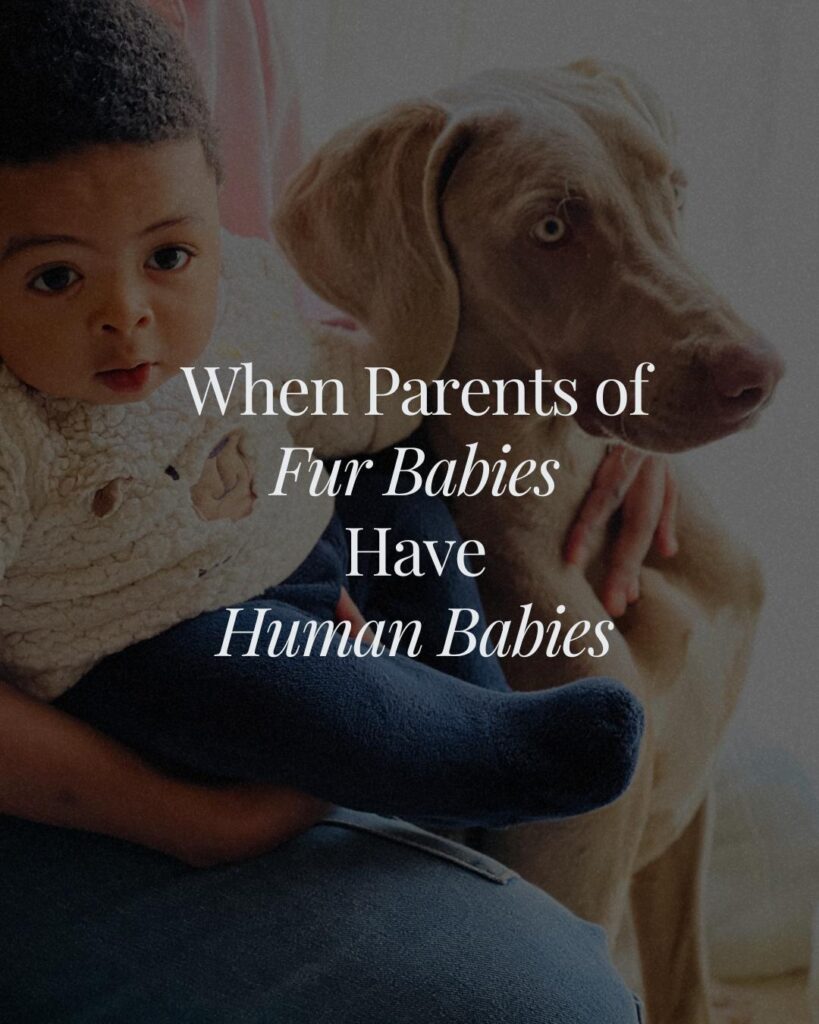
Since I am not a dog person, I have to don an extra empathy hat when parents of newborns, often teary-eyed, ask me how to handle the transition with their new baby, the dog being the baby already at home.
Pet lovers out there will not be surprised to hear that 70% of Americans have pets, and the pet industry expects over 150 billion dollars in spending this year. Some of you actually spend more on your pets’ health than your own.
Well, when it comes to bringing a human baby into the home of a fur baby, there can be challenges. From my standpoint, I am worried about the baby’s safety, but parents of newborns are often overwhelmed by guilt. Suddenly, there’s less time for walking the dog or just playing together. Now, your daily narrative is for the ears of your baby, and very likely, you only have eyes for your baby. While some take this transition in stride, others feel the weight of this shift.
When doggy moms and dads ask me for my advice, I let them know the following:
- You are not alone. Research suggests that guilt is extremely common among fur parents, 85% of whom consider their dog a family member. Analogous to the advice I give second-time parents, your baby’s experiences will be enhanced by the presence of your pet. And if you treat your pet with love, your baby will model that behavior. Plus, kids raised around animals are less likely to have asthma and allergies.
- Before the baby is born. One study of dog parents accumulated suggestions for the transition:
- As you get closer to the arrival of your new baby, consider playing the sounds of a crying baby. I know, this sounds horrible– why practice for discomfort? But it will help your dog become accustomed to the sounds of your post-baby home.
- Crate train your dog (if not already crate trained). This may come in handy when you need to attend to your baby and your dog needs a safe, comforting place out of the way. Crate training ahead of the baby will help ease the transition, and the crate, ideally, will be a place of calm rather than a place of punishment.
- Find some safe dog runs. Whether in your backyard or a nearby park, find a place you can let your dog loose. Afterall, you may not be able to go on as many walks as you used to.
- Teach your dog commands that will assist you when you need a minute, like “stay,” or “wait.”
- Before bringing the baby home. When you are in the hospital, send home a receiving blanket or cap. Your dog can learn to associate the smell with home and loved ones. Ideally the piece of clothing you send home has scents of you blended with scents of your new baby.
- Don’t leave a baby or toddler alone with a dog. Even once you feel very comfortable, sometimes the baby may not know when to stop poking at the dog. As your baby gets older, you will have to teach your child not to play tug-of-war or be rough with dogs to reduce the risk of bites. You will also need to teach your child how to approach others’ dogs and ask permission before petting them.
- Talk to your vet. Your vet knows your dog and can offer you guidance specific to your situation.
Takeaways
You love your fur baby, and your heart will grow to make room enough for your human baby. In the meantime, try some of the above approaches to help with the transition. Plus, I always remind parents that little humans go to bed early, leaving you and your first baby with some alone time.
Thank you for reading my human-generated articles! If you found this helpful or educational, please share, follow on your preferred platform, or subscribe below. For coaching or consultations, please contact me at www.DrAngel.com.
References:
Kogan, Lori R., Jennifer Currin-McCulloch, Cori Bussolari, and Wendy Packman. 2024. “And Child Makes Four: The Impact of a New Child on Dog-Owning Families” Pets 1, no. 3: 402-419. https://doi.org/10.3390/pets1030028
https://www.usnews.com/insurance/pet-insurance/pet-owner-cost-survey