Three Quick Tricks To Eating More Microbes
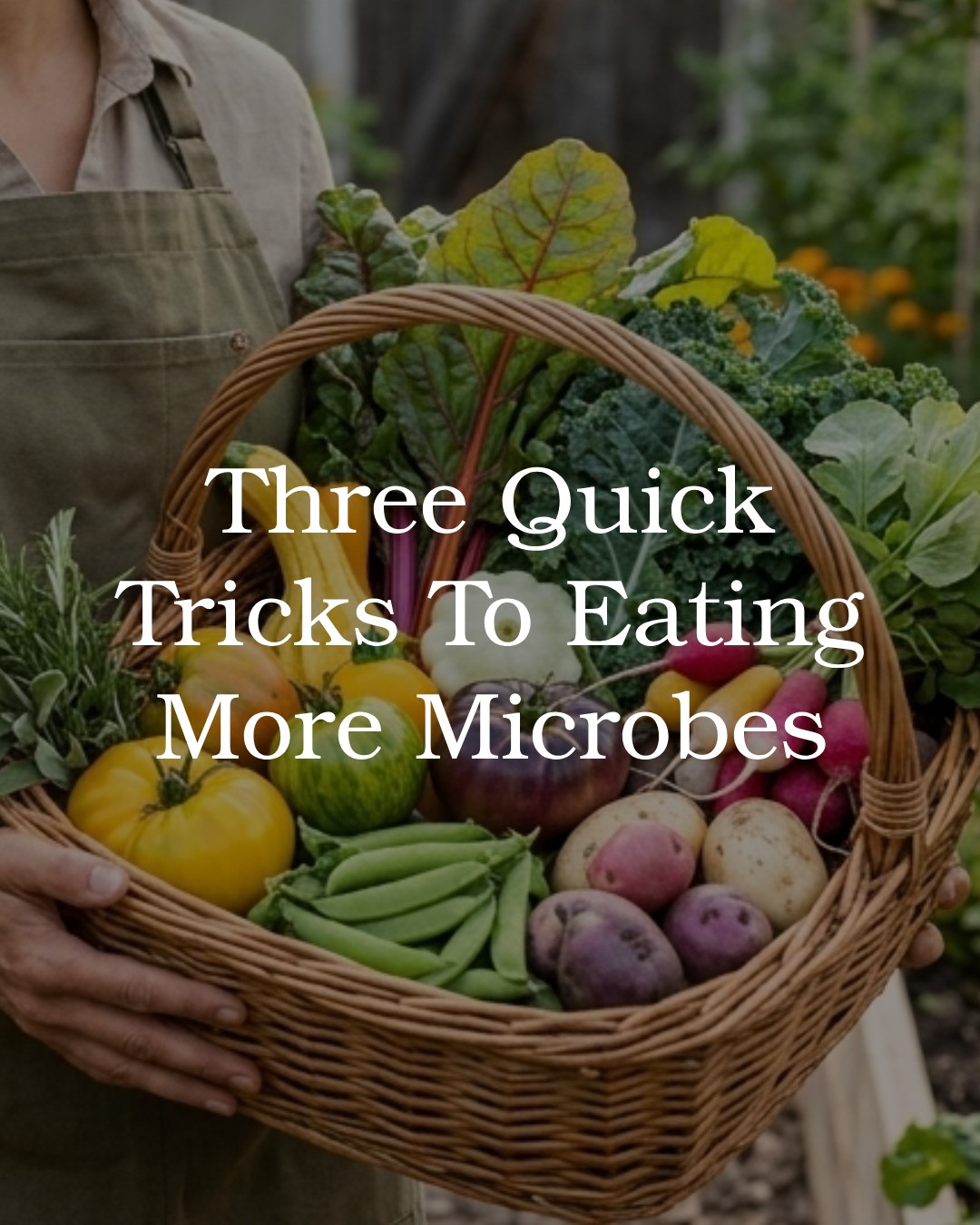
A recent study assessing microbe intake found that French children and adults consume nearly twice as many microbes as their American counterparts, and those individuals that ate more microbes tended to have overall healthier diets.
We share our bodies with trillions of bacteria, or microbes, that interact with every organ system — yet it was only 25 years ago that we started discovering the true extent of their role. While we are still learning about individual strains, combinations of strains, and how they may affect human health, it seems fairly clear that Americans need to pay more attention to their microbiomes.
There are several widely recommended interventions to improve your gut health, including eating more cultured, fermented, and prebiotic-rich foods, like fiber. Here are three simple tips to incorporate more live microbes into your family’s diet.
1. Don’t peel your fruits and vegetables.
Healthy microbes in the soil and air live on and inside your fruits and vegetables. When we excessively peel, wash, or cook our produce, we lose some of these exterior microbes. Not peeling is also a time saver! When my kids want a carrot, they eat it, unpeeled. When our family cuts sweet potatoes, potatoes, beets, or turnips, the peel remains.
And though cooking your vegetables may kill the microbes, even consuming these dead microbes is good for your gut lining and immune health! So if you are making your baby apple sauce, baking your teen an apple pie, or making yourself some baked sweet potato wedges, save time on the peeling.
2. Eat more raw fruits and veggies.
Here is another time saver. Rather than cooking the broccoli, serve it raw. Start early on habits like raw celery (and peanut butter!), broccoli, cauliflower, carrots, or radishes as snacks or side dishes.
In one study examining apples, researchers determined that one apple provides about 100 million bacterial cells, and while the absolute number of bacteria present in conventionally grown and organic apples are the same, the organic apples were found to have more diverse and healthier profiles of microbial strains.
3. Plant a little garden.
Eating a carrot or plucking leaves of basil straight out of your soil, from your garden is a delight for children. Start with something easy like planters or even a little pot at a kitchen window. Have fun with expanding your garden and building a healthy lifestyle along the way.
The Breakdown
Live microbes live synergistically with us. In addition to eating cultured and fermented foods, how we consume our fruits and vegetables also influences our microbiome. Simple changes like leaving the peels intact, eating more raw produce, and planting a garden can help your microbiome flourish.
You may also enjoy learning how to cultivate a baby’s microbiome.
Thank you for reading my human-generated articles! If you found this helpful or educational, please share, follow on your preferred platform, or subscribe below. For concierge parent coaching or consultations, please contact me at www.DrAngel.com.
For more perspective on what it takes to have and raise a thriving little human, check out my podcast, The Unplanned Parent, on Apple, Spotify, YouTube, or wherever you listen or watch.
References:
Gazan, Rozenn et al. “Association Between Dietary Live Microbes and Diet Quality Among Children and Adults in France.” Nutrition bulletin vol. 51,2 (2026): 245-257. doi:10.1111/nbu.70057
Hill, Colin et al. “Positive Health Outcomes Associated with Live Microbe Intake from Foods, Including Fermented Foods, Assessed using the NHANES Database.” The Journal of nutrition vol. 153,4 (2023): 1143-1149. doi:10.1016/j.tjnut.2023.02.019
Wassermann, Birgit et al. “An Apple a Day: Which Bacteria Do We Eat With Organic and Conventional Apples?.” Frontiers in microbiology vol. 10 1629. 24 Jul. 2019, doi:10.3389/fmicb.2019.01629
Mills, Susan, and Reynolds Paul Ross. “Colliding and interacting microbiomes and microbial communities – consequences for human health.” Environmental microbiology vol. 23,12 (2021): 7341-7354. doi:10.1111/1462-2920.15722