Bug Sprays: Must Know Facts For Parents
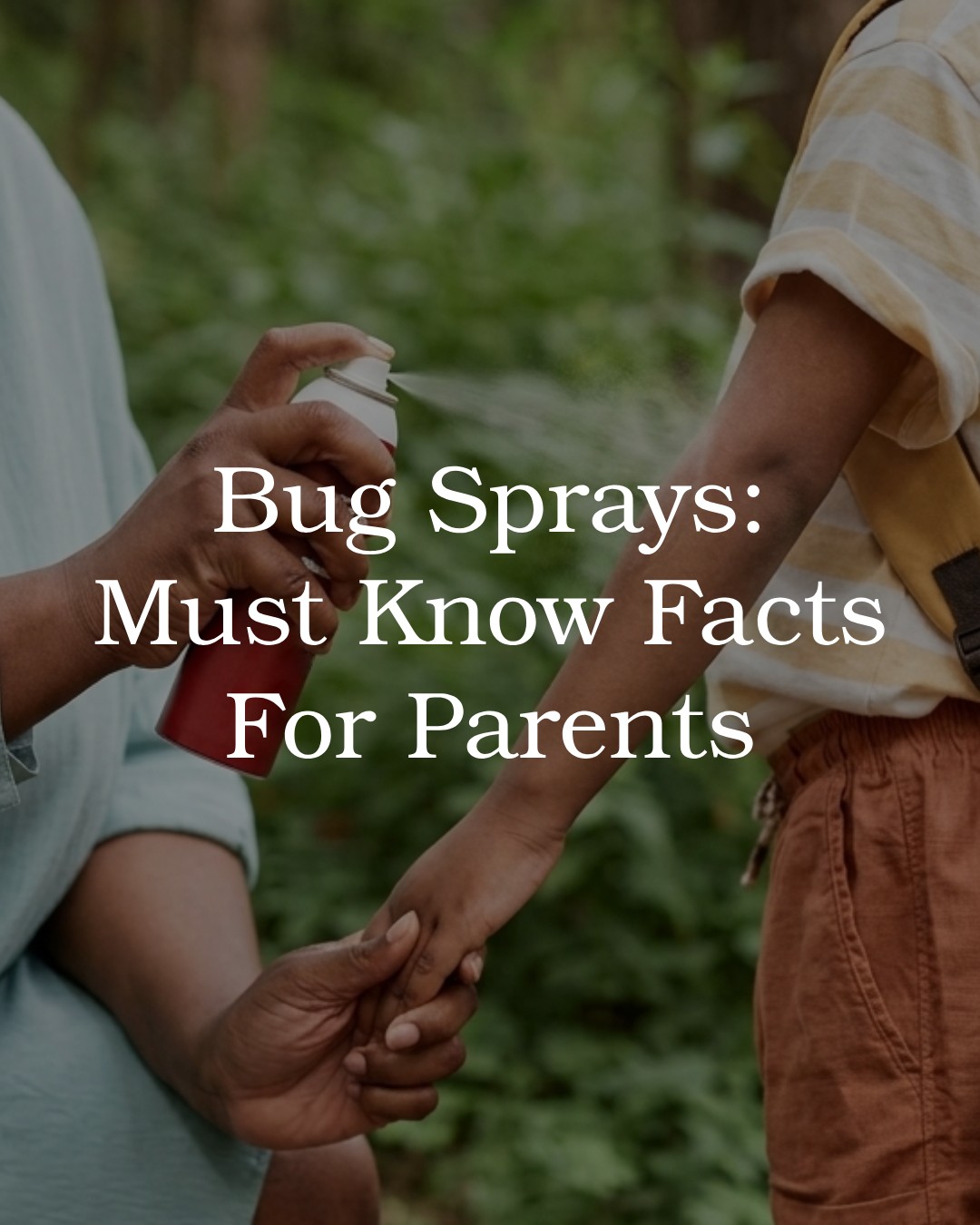
Whether for a picnic or travel to exotic destinations, parents often ask me about insect repellents. These questions matter because the right repellent can help prevent mosquito-borne illnesses like West Nile virus, malaria, chikungunya, dengue, or Zika, as well as tickborne illnesses like Lyme. Here are the most commonly asked questions and evidence-based answers.
Is DEET safe for my child? DEET and picaridin are the most common conventional insect repellants, and both are safe and highly effective against mosquitoes and ticks. DEET in particular has been well studied: protection lasts 4-9 hours, especially in lotion or emollient formulations, likely because sprays are applied less uniformly. Even lower concentrations at 7-10% are effective (but duration may be less than 4 hours), with longer duration of efficacy at higher concentrations; efficacy plateaus around 50%. The American Academy of Pediatrics (AAP) recommends using concentrations under 30% for children. While DEET is approved for all ages, due to theoretical absorption concerns, some recommend DEET be avoided for children under age 6 months.
Picaridin has a safety and efficacy profile similar to DEET, but without the oiliness, odor, or damage to synthetic fabrics and plastics that DEET is known for. Picaridin is approved for all ages, but some organizations recommend avoiding its use until age 2 months. Here, the AAP recommends limiting use to concentrations under 10% for children.
IR3535 is short for Insect Repellent 3535, a biodegradable, light-on-skin option. It is favored for its less toxic profile and is preferable for those who want an odorless oil. This repellent is also more established in Europe and was initially produced for the purpose of use on younger children.
Are “natural” or “organic” repellants effective? Somewhat surprisingly, many of these more natural options are effective against mosquitos — and sometimes even against ticks — though their effectiveness tends to wear off faster than conventional products. If you are using natural repellents with plant-based ingredients, I recommend re-applying more frequently.
How do I apply repellent correctly?
- The order of operations for layering repellent with sunscreen is sunscreen first, then repellent. Consider a stronger sunscreen since repellent may render sunscreen less potent. Avoid combination products, since sunscreen needs to be applied more often than repellent.
- Avoid applying on/near eyes, mouth, hands, or cuts.
- Be sure to wash it off at bedtime.
- For sprays, I recommend spraying onto your hands and then rubbing onto skin. This is especially important when applying on faces.
- In order to limit ingestion or exposure to the eyes, adults should apply repellents.
Which product do you use on your own kids? When asked this question, my answer is pragmatic and context dependant:
- If I am in an area without endemic mosquitoborne or tickborne illnesses, and I need protection for a few hours, I use natural products containing Oil of Lemon Eucalyptus (or PMD, the synthetic version).
- If I am worried about Lyme, other vector-borne diseases, or I am traveling internationally, I use DEET or Picaridin for myself and for my children.
Any other recommendations? I recommend travelers purchase their repellants in the U.S., pack protective clothing (long-sleeves and long pants), and avoid prolonged exposure at dawn and dusk, when mosquitos are most active. The EPA (U.S. Environmental Protection Agency) provides some product-specific information, such as hourly protection against mosquito and tick bites. Unfortunately, it does not include information on all market products.
Since parents and some health care providers are hesitant about using repellants on infants, I often recommend waiting until babies are older before traveling to high-risk countries, such as those where malaria is endemic. If you must travel with young children, use protective clothing, minimize prolonged outside exposure, prioritize accommodations with air conditioning and mosquito netting, and use repellents when in mosquito ridden areas.
Inquire with your health care team about pre-travel vaccines and malaria pills.
Take Homes
- Insect repellents are safe, effective, and approved for all ages.
- Higher concentrations are usually more effective, but the AAP recommends DEET at concentrations of 30% or less and picaridin at less than 10%.
- For everyday nuisance protection, natural repellants are a reasonable and safe choice.
- For protection against Lyme, malaria, dengue, or other vector-borne illnesses, DEET or picaridin remain the most trusted and safe choices.
- Use products properly to avoid ingestion and eye contact.
Thank you for reading my human-generated articles! If you found this helpful or educational, please share, follow on your preferred platform, or subscribe below. For concierge parent coaching or consultations, please contact me at www.DrAngel.com.
For more perspective on what it takes to have and raise a thriving little human, check out my podcast, The Unplanned Parent, on Apple, Spotify, YouTube, or wherever you listen or watch.
References:
Faridah, Lia et al. “Effectiveness of mosquito repellents for human: A systematic review of human-based studies.” Acta tropica, vol. 280 108182. 12 Jun. 2026, doi:10.1016/j.actatropica.2026.108182
Tavares, Melanie et al. “Trends in insect repellent formulations: A review.” International journal of pharmaceutics vol. 539,1-2 (2018): 190-209. doi:10.1016/j.ijpharm.2018.01.046
https://www.cdc.gov/yellow-book/hcp/environmental-hazards-risks/mosquitoes-ticks-and-other-arthropods.html
https://www.epa.gov/insect-repellents/deet