New School Year, New Goals, New Approach: Vision Boarding with Your Family
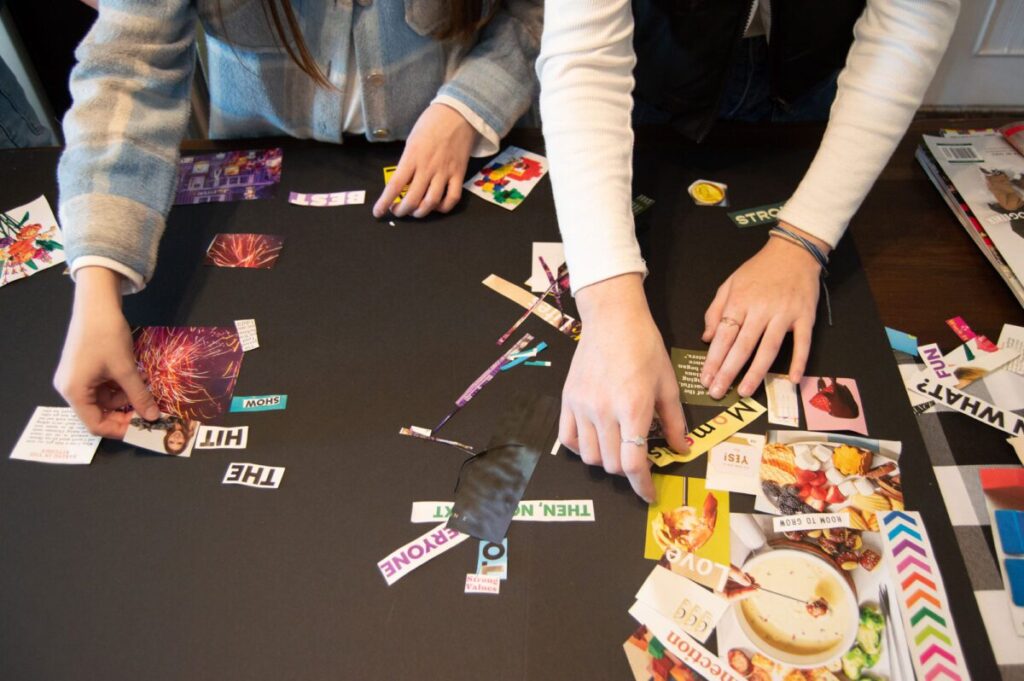
Two days ago, I made my first vision board. While asking my children about their hopes and goals for the new school year, a light bulb idea struck: Why not create a vision board together?
Initially, my kids were not in favor—there was a fair amount of under-breath mumbling and grumbling. But once we began taping butcher paper to the dining table, their curiosity and enthusiasm started to emerge.
Our vision boards were simple, and gathering supplies took less than five minutes—possibly because we always have butcher paper on hand.
Why Set Goals?
Research shows that publicly setting and writing down goals improves the likelihood of achieving them. This process also models healthy goal-setting for children, making participation enjoyable—even for teens. Writing down goals and sharing them with others boosts accountability and achievement, which has been supported in studies across disciplines. For maximum impact, goals should be specific and attainable.
Supplies
- Butcher paper or poster boards (one per family member if using poster board)
- Scissors (ideally one per person)
- Glue sticks
- Magazines (Our selection ranged from Us Weekly and The Economist to children’s magazines like National Geographic, Ranger Rick, and High Five)
- Markers and crayons (Some like glitter; personally, I avoid it. This was a fully analog activity—no printing or internet searches for inspiration)
Areas of Focus: FACETS
To guide us, my oldest invented the acronym FACETS (or FACES, if you omit teams):
- Friends and family
- Academics
- Community and Connection
- Extracurricular activities
- Teams
- Self-care/self-improvement
Get to Work
We each claimed part of the butcher paper, reviewed the FACETS topics, and began working. We tried to remember setting specific and achievable goals.
Each of us spent 60-90 minutes on our boards, after which we cut out and posted them in a public area of our home. We shared our visions, presenting for about three minutes each.
I’ll refrain from sharing my children’s personal visions, but here’s a sampling of our unique goals:
- Get a red belt in taekwondo
- Read the Inkheart series
- Don’t cry over spilled milk
- Work on yelling less
- Prioritize people over screens
- More dancing
- Don’t annoy my sister
- See rainbows everywhere
Overall, I found vision boarding with my family to be meditative and highly rewarding. Crafts are calming, and group crafting is an activity during which kids of all ages (even 48!) can find some joy. The shared experience with my family and the process of goal-envisioning and goal-setting were all worthwhile, but the gift that continues to give is walking past the vision boards everyday. My heart lifts a little when I walk past them, and I see a little rainbow.
If you found this helpful or educational, please share, follow on your preferred platform or subscribe below. For coaching or consultations, please contact me at www.DrAngel.com.
References
Madden, Lowell E. “Motivating students to learn better through own goal-setting.” Education, vol. 117, no. 3, spring 1997, pp. 411+.
Matthews, Gail. “The Impact of Commitment, Accountability, and Written Goals on Goal Achievement.” Dominican University, 2015.